
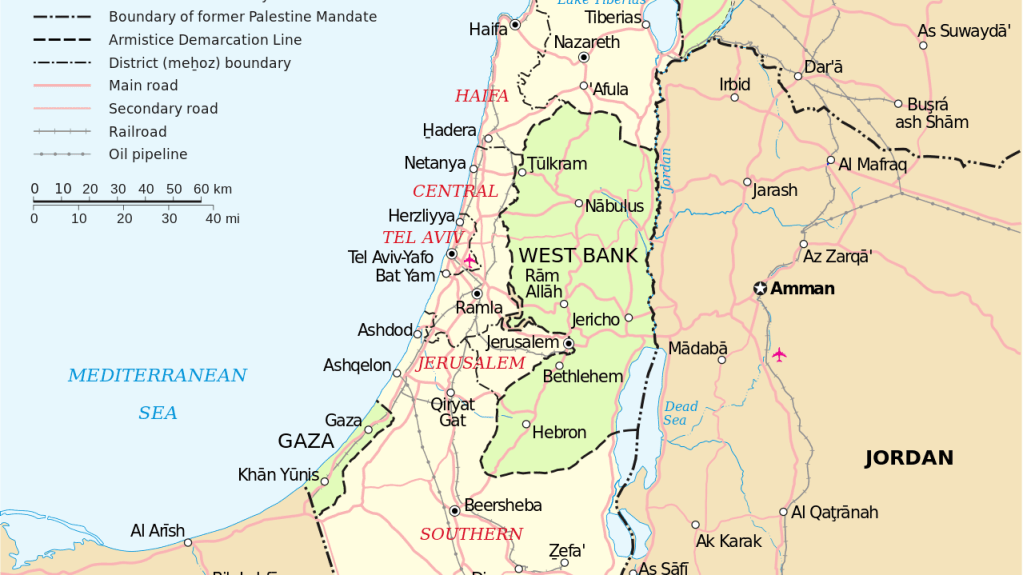
I’ve spent the last few days sick with the crud and curled up with my tablet reading as much as humanly possible about the terrorism and war in Israel and Gaza. Not because I think it will do anyone any good, but because this is my flex in the face of devastation and trauma—total immersion in information. Seeking a foothold, investigating, asking questions, following rabbit holes, digging and digging until I get far enough down the well to feel settled, so I can climb back up and enjoy life again. But I can’t with this. I’ve remained quiet on social media, in large part due to my own ignorance of the deep complexity of the issues involved, and also because millennia of cycles of conflict, restoration, conflict, restoration, and conflict are difficult to wrap my mind around.
I’ve been genuinely horrified by swift reactions from some whose politics otherwise generally align with mine. And I have been equally horrified by the swift reactions of those whose politics tend to chafe and anger me. I’ve looked beyond the headlines, looked deeply, and read widely, and I’ve found reflections from many who are also struggling with the ugly reality of all of this, but who are doing so from a place that values all human life—not just the lives of those with whom they agree politically.
And so that’s become my foothold as well—to look at these events from a place that values all human life.
It’s heartening that I’ve seen this sentiment from more than a few—that yes, it is possible to hold seemingly contradictory perspectives. To be horrified at the loss of life from a vicious and brutal terrorist attack, the murder of innocents in their beds, at a music festival. A music festival! To be horrified at the antisemitism that has been uncovered/revealed by the reactions of some supposed comrades. To be equally horrified at the overwhelming military response that is extending a pre-existing humanitarian crisis and driving it beyond tragedy in search of revenge. To be horrified at how quickly we divide into factions that devalue human life.
I am sitting here in my safe house, in my safe town, with my safe cold meds, with my safe tissues and my safe computer, watching in abject horror as this dark fountain of ugliness and vitriol and hate that may be bottomless, that may have no resolution, continues to pour forth.
I worry about my Jewish friends, that they feel less safe in this world. And I worry about my friends of Arab descent, that they feel less safe in this world. And I think about this place in the world, this Fertile Crescent, that has been so influential on human thought, on human technology and development, that has been a crossroads for culture and art and music and so much good in the world—and what it is about this tiny place that yields such intractable generational conflict and suffering? Because it’s not as simple as colonialism and de-colonialism when every family involved has ancestral “claim” to the land.
Yes, the land has a history of colonization—by Egyptians, Greeks, Romans, Ottomans, Persians, the British. It’s been hotly contested for millennia. Both Palestinians and Jewish folks can trace their ancestry to the region.
It’s not like this country, where most of the folks living here are in fact descended from or genetically related to western european colonizers. America isn’t my ancestral homeland. And yet I feel a sense of place and belonging here. My “people”—and I have the privilege of not-knowing, not having to know, not having ill legends and myths of my ancestors coloring perceptions of me before I enter a room, not having the color of my skin speak before my mouth can even open—my “people” haven’t been chased out of nearly every city or region in which they have settled. In fact, it’s likely that my ancestors were the ones doing the chasing, the dark mythologizing, the enslavement, the murdering. And I don’t want to look back too far, because I want to be an underdog, too—I’m Appalachian! My people were from the hills, they were poor, they didn’t own slaves, right? Because I don’t want to be confronted with the shame of my ancestors. Because I have the privilege of learning from their mistakes and behaving better in the future.
Because I’ve never been chased from my homeland, because I have a home where-ever I go, I have the privilege of asking questions like this one—”What is so important about this land, that people behave as if they are the only ones who can rightfully live upon it, who are deserving of it, so much so that all Others must be eradicated from it?”
I am not a religious person, and there’s a large part of me that yearns to dismiss this situation as utterly intractable because of the unique certainty that religion can bring to conflict. That there can be no reasoning beyond, “Our god gave us this land.” That makes claims that do not allow for compromise or peace.
There have been so many disgusting injustices committed in the name of god or gods that surely if there is a god that has anything like a unified perspective on human behavior, it is sick to death of human conflict, greed, murder, oppression, war done in its name. I throw my hands up in frustration, and because there is too much to say that has already been said.
But these are all abstract thoughts, and meanwhile, there are actual children dying—actual children who have died this week, and who will continue to die in the weeks and months to come. It offends my deepest moral sensibilities that anyone anywhere would rejoice or brush off the death of a child as deserved or as acceptable collateral damage based solely on the actions of a government or governments, or terrorist group, or leader(s) of those groups.
If you are not like me, and you have settled all of this in your mind, then I wish you luck with your glimmering certainty.
I apologize for being completely unqualified to have said any of this, and especially so poorly. I continue to struggle.
 Crabaghast!